
For decades, repairing a slab leak meant bringing a pneumatic jackhammer into a homeowner's living room or kitchen. Today, overhead pipe rerouting using cross-linked polyethylene (PEX-A) through attic chases and internal walls provides a cleaner, permanent, and often lower-cost alternative that completely preserves the structural integrity of your foundation.
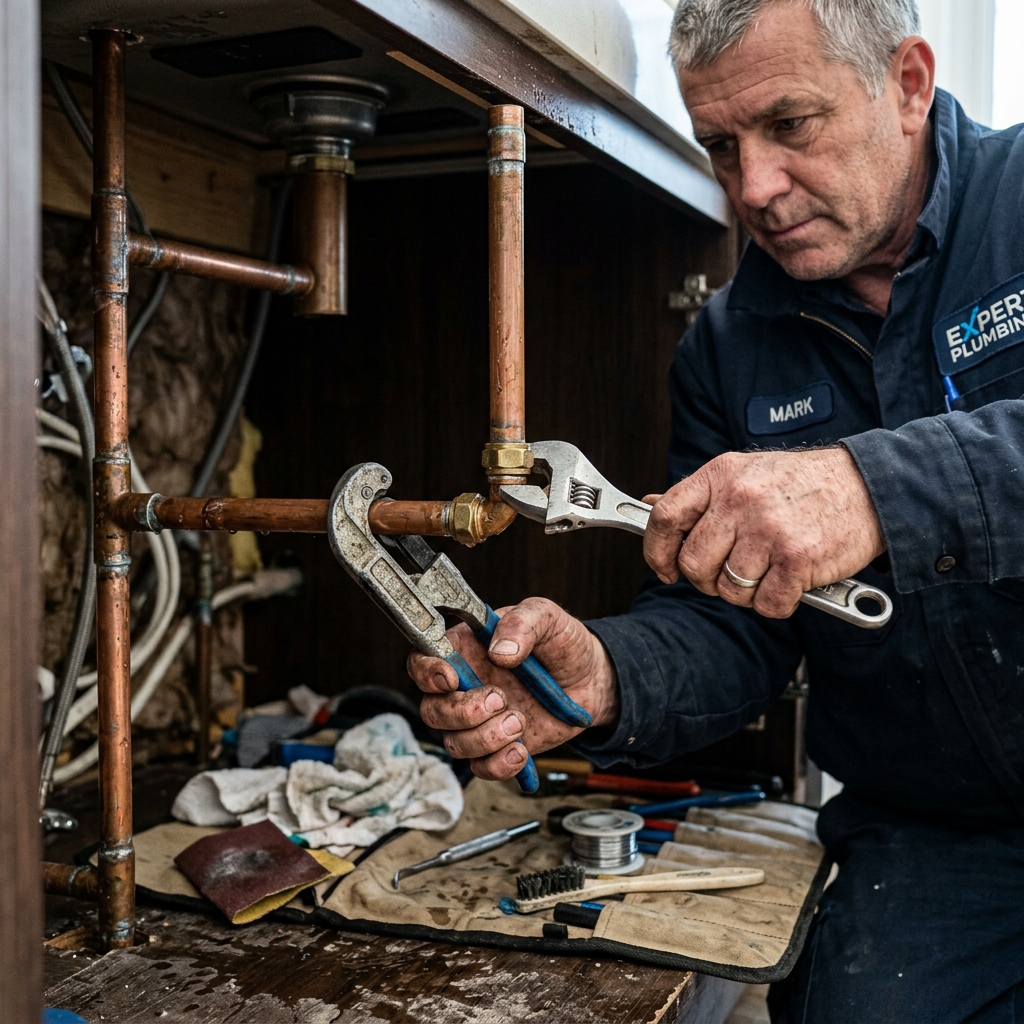
| Specification / Diagnostic Metric | Engineering Standard / Detail |
|---|---|
| Primary Materials | PEX-A (Engel method) expansion tubing & brass/poly fittings |
| Foundation Impact | Zero structural concrete demolition or jackhammering |
| Flooring Impact | Preserves marble, hardwoods, tile, and radiant heat systems |
| Turnaround Time | Typically 1 to 2 business days for complete line bypass |
| Warranty Profile | Often 25-year manufacturer pipe warranty + labor guarantee |
| Average Cost Range | $1,800 – $4,500 per isolated line (vs. $3,500+ for direct slab repaving) |
What is an Overhead Pipe Reroute?
An overhead pipe reroute involves abandoning the damaged subterranean water pipe completely beneath the concrete foundation and installing a brand-new supply line through the home's attic, ceiling spaces, or interior stud bays. Rather than searching for a needle in a haystack and chipping away structural concrete, technicians cap the failed underground line at both manifold ends and route new water delivery above the living area.
Why Homeowners Prefer Overhead Rerouting
Eliminates toxic concrete silica dust in living quarters, protects irreplaceable flooring materials, bypasses treacherous post-tension tension cables, and guarantees that the old corroded copper line will never leak again.
Direct Slab Jackhammering vs. Overhead Reroute Comparison
| Factor | Direct Slab Jackhammer ("Spot Repair") | Overhead PEX-A Reroute |
|---|---|---|
| Structural Foundation Impact | Cuts or chips through 4"–6" structural slab; vapor barrier breached | Zero concrete contact; foundation remains 100% intact |
| Dust & Home Contamination | Severe silica dust throughout living areas requiring plastic containment | Minimal drywall dust contained to small access ports |
| Flooring Damage | Destroys continuous tile, engineered hardwood, or natural stone | Zero flooring removal; pipes drop down inside wall cavities |
| Risk of Future Leaks | High: remaining copper underground continues corroding | None: abandoned line is dry; new line is corrosion-proof PEX-A |
| Post-Tension Cable Hazard | Extremely high risk of catastrophic cable rupture if struck | Zero risk: no concrete excavation required |
Material Selection: Why PEX-A Dominates Overhead Rerouting
Modern plumbing contractors almost universally specify PEX-A (cross-linked polyethylene manufactured via the Engel method) over rigid copper or PEX-B crimp systems for overhead attic applications. The engineering advantages include:
- Thermal Elasticity: PEX-A expands up to 300% without rupturing in cold climates, drastically reducing winter freeze-burst vulnerability in attic spaces.
- Full-Port Flow Characteristics: ProPEX expansion fittings maintain uniform internal diameter, minimizing water turbulence and hydraulic friction loss.
- Chemical Inertness: Completely immune to the pitting corrosion, chloramine degradation, and acidic pH soil reactions that destroy copper pipes.
- Continuous Flexible Runs: Flexible tubing bends smoothly around framing members, eliminating underground and hidden in-wall joints.
The Step-by-Step Reroute Engineering Protocol
A certified rerouting project follows a strict five-step execution process:
- Manifold Identification: The diagnostic technician isolates the exact supply manifold feeding the leaking fixture (e.g., kitchen island, master bath).
- Wall Access Points: Small, surgical drywall incisions (typically 6"x6") are made behind baseboards or inside vanity cabinets to intercept the fixture riser.
- Attic Line Pull: PEX-A lines insulated with closed-cell elastomeric foam tubing are pulled across attic joists or drilled through framing members.
- Line Capping & Tie-In: The abandoned subterranean pipe is disconnected and capped at both ends. The new PEX line is expanded into place and pressure-tested at 100 PSI.
- Drywall Restoration: Access cuts are patched, taped, textured, and prepped for paint, leaving the home virtually indistinguishable from its pre-repair state.